For Information About Legal Services, Contact Us on WhatsApp

Traders are not eligible to Access Facilitation Councils for Delayed Payment Provisions under MSMED Act

MSME

In a recent development, traders who have registered themselves as MSMEs on the Udyam portal are not eligible to access Facilitation Councils for delayed payment provisions under the Micro, Small, and Medium Enterprises Development (MSMED) Act[1]. This article aims to provide an in-depth understanding of this decision and its implications for traders and MSMEs. Read More: MSME Samadhaan’s Delayed Payment Recovery Procedures in India Background: The Office Memorandum dated 2nd July 2021 issued by the Ministry of MSME decided to include retail and wholesale traders as MSMEs, allowing them to register on the Udyam registration portal. However, the benefits available to these traders are restricted to Priority Sector Lending only. The Udyam registration was granted for NIC code numbers 45, 46, and 47, which cover retail and wholesale activities. The decision to exclude traders from accessing Facilitation Councils was made after some traders approached these quasi-judicial mechanisms set up by the States under the MSEMD Act to ensure timely payment due to Micro and Small Enterprises (MSEs). Read More: What Are the Common Errors to Avoid in Msme Samadhaan Procedures? Reasons for Exclusion: Dr. D. Gandhikumar, Member of Facilitation Council, Chennai, and former President of the Federation of Indian Micro and Small & Medium Enterprises (FISME), has stated that applications filed by traders registered as MSMEs against cases of delay in payments by their buyers are summarily rejected. The reason being that the registration of traders is solely for the limited purpose of allowing them access to priority sector lending by banks as mentioned in the Office Memorandum of 2nd July 2021. Read More: Best Strategies in filing MSME Samadhaan Proceedings Furthermore, Dr. Gandhikumar explained that the delayed payment provisions were specifically designed to assist small scale industries in the 1990s, which were later termed as MSEs under the MSMED Act 2006. This was done to ensure these small units received their dues on time, as many were facing financial difficulties due to a shortage of working capital. Read More: Business-to-Business (B2B) debt recovery legal options Industry experts also believe that allowing traders to tap into the delayed payment mechanism would overwhelm the already burdened Facilitation Councils. Read More: Most Important MSME Samadhan Cases ruled by Indian Courts Conclusion: In conclusion, while the registration of traders as MSMEs on the Udyam portal allows them access to priority sector lending, they remain ineligible to access Facilitation Councils for delayed payment provisions under the MSMED Act. This decision aims to protect the interests of genuine small scale industries and prevent the overburdening of Facilitation Councils. By focusing on the original intent of the delayed payment provisions, which was to support small scale industries facing working capital shortages, the decision ensures that these MSEs receive the much-needed assistance in a timely manner. Read More: What are the consequences of non-compliance with MSME Samadhaan regulations? As a result, traders, although classified as MSMEs, are advised to explore alternative avenues for resolving payment disputes and seeking financial assistance. This differentiation between traders and other MSMEs under the MSMED Act acknowledges the unique challenges faced by small scale industries and allows Facilitation Councils to function more efficiently in their core mission of supporting genuine Micro and Small Enterprises. Read More: Clause (h) in section 43B of the IT Act – A Beacon of Hope for MSME | MSME Samadhaan Proceedings It is essential for both traders and other MSMEs to be aware of these distinctions in order to understand the benefits and limitations of their respective registrations. By doing so, they can better navigate the legal and financial landscape while pursuing growth and success in their respective sectors. Legal Disclaimer: The information contained in this blog post is for general information and educational purposes only. Nothing contained in this blog post should be construed as legal advice from The Aran Law Firm or the individual author, nor is it intended to be a substitute for legal counsel on any subject matter.
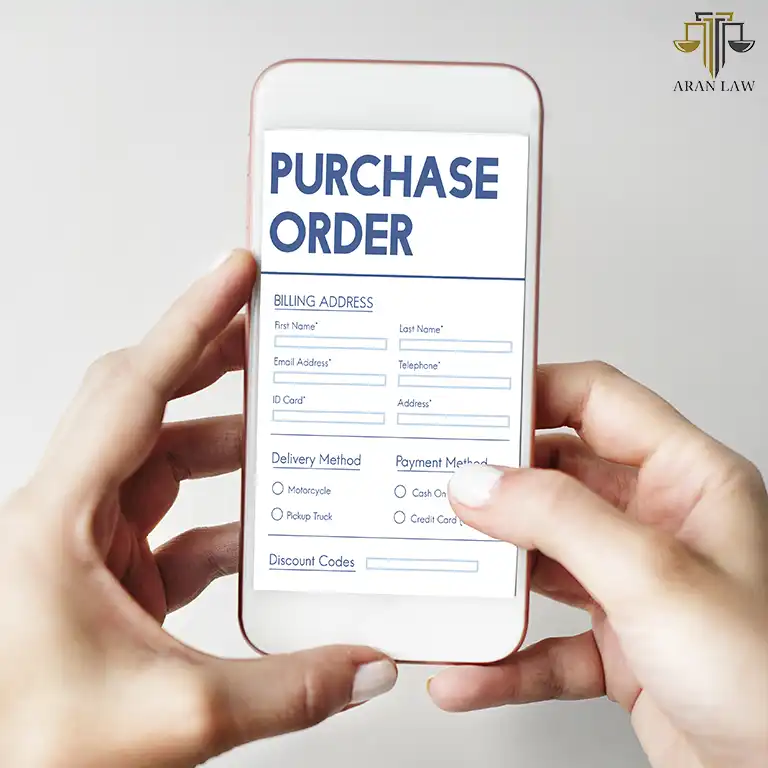
The Power of Purchase Orders: Why No Trader Can Afford to Ignore Them

Purchase Orders

Attention, traders! If you’re not using purchase orders in your business transactions, you’re missing out on a vital tool that can help you streamline your operations, mitigate risks, and safeguard your interests. Here’s why purchase orders are the unsung heroes of successful trading ventures: Clarity and organization: Purchase orders create a clear and detailed record of the products or services being ordered, including quantities, prices, and delivery details. This helps both parties understand the precise terms of the transaction, reducing the chances of misunderstandings or disputes. Say goodbye to confusion and hello to smooth transactions! Legal protection: A well-drafted purchase order serves as a legally binding contract between the buyer and the supplier. This means that both parties have legal recourse in case of non-compliance or breach of contract. With a purchase order in place, you can trade confidently, knowing that your interests are protected by debt recovery lawyers and contract lawyers in India. Financial management: Purchase orders help businesses keep track of their expenses and inventory. By assigning unique PO numbers to each transaction, you can easily match invoices with corresponding purchase order, making it a breeze to verify and approve payments. Plus, POs help you monitor your inventory levels, enabling you to make informed purchasing decisions and avoid stockouts or overstocking. Improved supplier relationships: Using purchase orders demonstrates professionalism and commitment to your suppliers, fostering trust and reliability in your business relationships. By clearly defining the terms of the transaction and setting expectations upfront, you can minimize misunderstandings and build long-lasting partnerships. Audit trail: Purchase orders create a paper trail that simplifies audits and regulatory compliance, such as MSME Samadhaan cases. Detailed records of your transactions make it easier to identify inconsistencies, spot fraud, or detect errors in your financial management. With purchase order, you can rest easy knowing that your business is operating transparently and efficiently, backed by the expertise of debt recovery lawyers. In summary, purchase orders are the secret weapon every trader needs to unlock the full potential of their business transactions. By providing clarity, legal protection, and enhanced financial management, POs ensure that your trading ventures are built on a solid foundation. Don’t let your business miss out on the benefits of this indispensable tool—start using purchase orders today and watch your trading success soar! Legal Disclaimer: The information contained in this blog post is for general information and educational purposes only. Nothing contained in this blog post should be construed as legal advice from The Aran Law Firm or the individual author, nor is it intended to be a substitute for legal counsel on any subject matter.

MSME Samadhaan’s Delayed Payment Recovery Procedures in India

the words msme written in big words surrounding with other related words in small letters

Get Your Due Payments Quickly with MSME Samadhaan’s Delayed Payment Recovery Procedures in India MSME Samadhaan’s Delayed payment recovery is a common issue faced by small business owners in India. In this blog, we will discuss the basics of delayed payment recovery, its impact on MSME and small business owners, the various schemes available to recover payment dues, and the best ways to recover dues from buyers. Read More: Traders are not eligible to Access Facilitation Councils for Delayed Payment Provisions under MSMED Act Impact of Payment Dues on MSMEs & Small Business Owners Payment dues can have a significant impact on the financial health and sustainability of MSMEs (Micro, Small and Medium Enterprises) and small business owners. Some of the ways in which payment dues can affect MSMEs and small business owners are: Read More: Best Strategies in filing MSME Samadhaan Proceedings Payment dues can hurt MSMEs and small business owners’ finances. It is important for them to take steps to ensure timely payment from their customers and clients. Read More: Business-to-Business (B2B) debt recovery legal options MSME Samadhaan Portal MSMED Act The MSME Samadhaan Act is significant because it aims to address some of the most pressing challenges faced by the sector, particularly delayed payment recovery, which has long been a hurdle for businesses, especially Micro, Small, and Medium Enterprises (MSMEs). These delays can severely impact cash flow, disrupt operations, and limit the growth potential of businesses. By ensuring timely payments, the act seeks to create a more equitable and efficient business environment. Read More: What are the consequences of non-compliance with MSME Samadhaan regulations? Understanding the basics of the act, including its key provisions and the challenges associated with its implementation, is essential for navigating the complex regulatory landscape. The act outlines specific timelines for payment settlements, penalties for non-compliance, and mechanisms for dispute resolution. However, implementation challenges, such as lack of awareness among stakeholders, delays in enforcement, and resistance from larger corporations, can sometimes hinder its effectiveness. Read More: Clause (h) in section 43B of the IT Act – A Beacon of Hope for MSME | MSME Samadhaan Proceedings By familiarizing yourself with the act’s framework, you can safeguard your business interests, strengthen your negotiation position, and ensure compliance with legal requirements. Moreover, this knowledge equips you to leverage available remedies effectively, should you encounter payment-related issues, ultimately promoting a more resilient and sustainable business ecosystem. Read More: How to Resolve Msme Samadhaan Payment Issues? Step by Step guide to file complaint before MSME Samadhaan Portal The MSME Samadhaan Portal helps Indian SMEs resolve disputes and grievances quickly. If you are an SME owner and would like to file a complaint through this portal, here is a step-by-step guide to help you do so: Read More: Step-by-Step MSME Samadhan Procedure for Delayed Payments Follow these simple steps to file a complaint on the MSME Samadhan Portal and resolve your issue. Read More: Delay in Filing MSME Claims Can Lead to Loss of Remedy: Applicability of the Limitation Act to the MSMED Act, 2006 Case hearing procedures in MSME Samadhaan Portal Once a complaint is filed on the MSME Samadhaan Portal, it is forwarded to the concerned authorities for further action. Before making a decision, the authorities may hold a case hearing. Read More: Importance of MSME Samadhaan Here are the steps involved in the case hearing procedures on the MSME Samadhaan Portal: Read More: Most Important MSME Samadhan Cases ruled by Indian Courts By following these procedures, the MSME Samadhaan Portal ensures that all complaints are resolved in a fair and transparent manner. Read More: Why is It Crucial to Seek Legal Advice for Msme Samadhaan Claims? Conclusion Delayed payment recovery is a common problem faced by small and medium enterprises (SMEs) in India. This article briefly discusses MSMEs and small business owners’ payment dues and the best ways to get paid. Additionally, the MSME Samadhaan Scheme is also discussed in detail, providing valuable information on how to get your dues waived. Our MSME Samadhaan Legal Advisors can help you get paid on time. They’ll offer free Forum case filing and defence advice. Read More: What Are the Common Errors to Avoid in Msme Samadhaan Procedures? Legal Disclaimer: The information contained in this blog post is for general information and educational purposes only. Nothing contained in this blog post should be construed as legal advice from The Aran Law Firm or the individual author, nor is it intended to be a substitute for legal counsel on any subject matter.

Disclaimer & Confirmation

Please read before continuing

Under the rules of the Bar Council of India, Aran Law is prohibited from soliciting work or advertising. By clicking “I Agree”, you acknowledge the following:

Please read and accept our  Privacy Policy.